Social Communication After Brain Injury: Understanding and Supporting Pragmatic Changes
After a brain injury, many people experience changes in how they connect with others. These changes can affect pragmatics—the social side of communication. Pragmatics includes things like knowing when to take a turn in conversation, how to shift topics, how much information to share, and how to interpret tone, body language, or facial expressions. While these skills are often automatic before injury, brain changes can make them harder to access. It’s not about lacking social awareness—it’s about how the brain processes information differently now.
What Is Pragmatic Communication?
Pragmatic communication is what helps us navigate the flow of conversation. It’s how we know to pause and let others speak, when to give background information, or how to adjust how we speak depending on where we are and who we’re talking to. After a brain injury—especially one involving the frontal lobes or right hemisphere—these processes might work differently. A person may share personal stories freely, jump between topics, speak with more intensity, or miss some of the “unspoken rules” others expect. None of this makes the person “wrong”—but it may lead to communication breakdowns if their conversation partners don’t understand what’s happening.
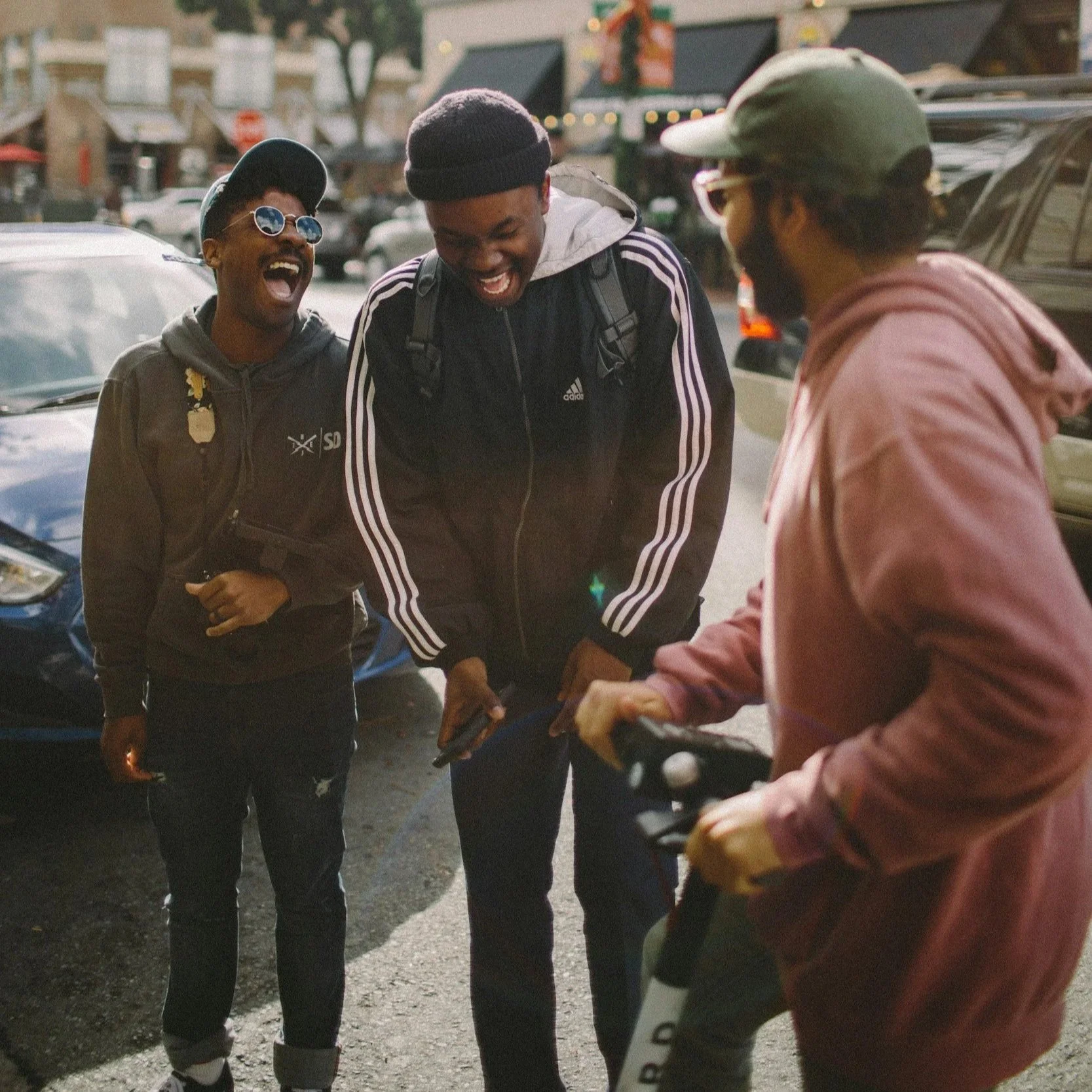
A group of 3 friends laugh and talk together outside
Noticing Communication Shifts
Every brain is different, and changes in social communication after brain injury can be subtle or significant. You might notice that your loved one now talks more than before, shares stories with more detail or less structure, or struggles to recognize when someone else is feeling confused, upset, or disengaged. They may also miss social cues like sarcasm, indirect requests, or facial expressions. These shifts can make conversations feel harder for everyone involved—not because the person is being inappropriate, but because their brain is working harder to organize, interpret, and respond in real time.
Supporting Successful Social Communication
Speech therapy can help build awareness and skills in ways that respect the person’s communication style. Strategies might include role-playing, video modeling, or scripted supports to prep for conversations. But family and friends also play a powerful role. You can help by modeling interactions rather than correcting them. For instance, if your loved one forgets to say hello, you might say, “Hi Jamie, it’s so great to see you,” in a warm and friendly tone. They may follow your lead in future conversations—without needing to be “taught” directly.
You can also co-create supportive cues or reminders to help conversations flow. For example, if your loved one tends to interrupt, a hand signal or gentle visual card with “your turn” or “pause” can serve as a helpful tool—not a reprimand. After social situations, talk things through with curiosity: “That part about the hospital came up quickly—do you want to brainstorm how we could introduce that story more smoothly next time?” This isn’t about fixing someone. It’s about giving them tools to express themselves in a way that lands the way they want it to.
Another great approach is using visual supports and routines to make communication more predictable and comfortable. A short checklist—“Say hi, ask how they are, take turns”—can help reduce cognitive load. Practice one skill at a time, like remembering to say goodbye at the end of a call, and build from there. These small but meaningful supports can create more ease in conversations and empower the person to feel more confident and connected—on their terms.
Pragmatic Skills That May Be Affected by Brain Injury
Conversational Skills
Initiating conversations appropriately
Taking conversational turns
Staying on topic
Shifting topics smoothly and logically
Ending conversations appropriately
Recognizing when others want to speak or disengage
Nonverbal Communication
Appropriate eye contact (intense, prolonged eye contact may be misinterpreted as aggressive)
Using facial expressions that match the message or intended tone
Interpreting others' facial expressions or body language
Using gestures to support communication
Recognizing personal space or physical boundaries
Tone and Intonation
Modulating voice volume
Adjusting speech rate and rhythm
Understanding sarcasm, humor, or emotional tone in others' speech
Matching tone of voice to social context or emotion
Social Appropriateness
Understanding and applying unwritten social norms (e.g., what is considered “too much” or “too personal”)
Recognizing when a comment may be offensive or unexpected
Making appropriate self-disclosures
Adapting communication based on audience (e.g., child vs. adult, formal vs. informal settings)
Perspective-Taking and Inference
Interpreting indirect or implied meaning (“Could you open the window?” as a request)
Understanding others’ beliefs, intentions, or emotions
Adjusting communication based on others’ reactions or feedback
Apologizing or repairing communication breakdowns
Discourse Organization
Structuring stories or narratives logically
Providing relevant background information
Including enough detail—but not too much—for listener understanding
Avoiding tangents or over-explaining
These skills can be impacted in different ways depending on the nature, severity, and location of the brain injury. Importantly, changes in pragmatic communication are often subtle and misunderstood by others—leading to social difficulties despite preserved vocabulary or grammar. Speech therapy can help rebuild these skills using real-world practice, video feedback, and collaborative strategy-building with loved ones.