How Virtual Reality (VR) Can Support Communication Skills in Speech Therapy
When most people think about virtual reality (VR), they picture video games or entertainment. What many don't realize is that VR is becoming an exciting tool in speech therapy because it allows people to practice communication in realistic environments without leaving the therapy room. For individuals with aphasia, brain injury, autism, social communication challenges, stuttering, cognitive-communication disorders, and other communication difficulties, VR can create opportunities to practice real-world skills in a safe, controlled, and repeatable way. Instead of talking about communication situations, people can experience them and practice navigating them.
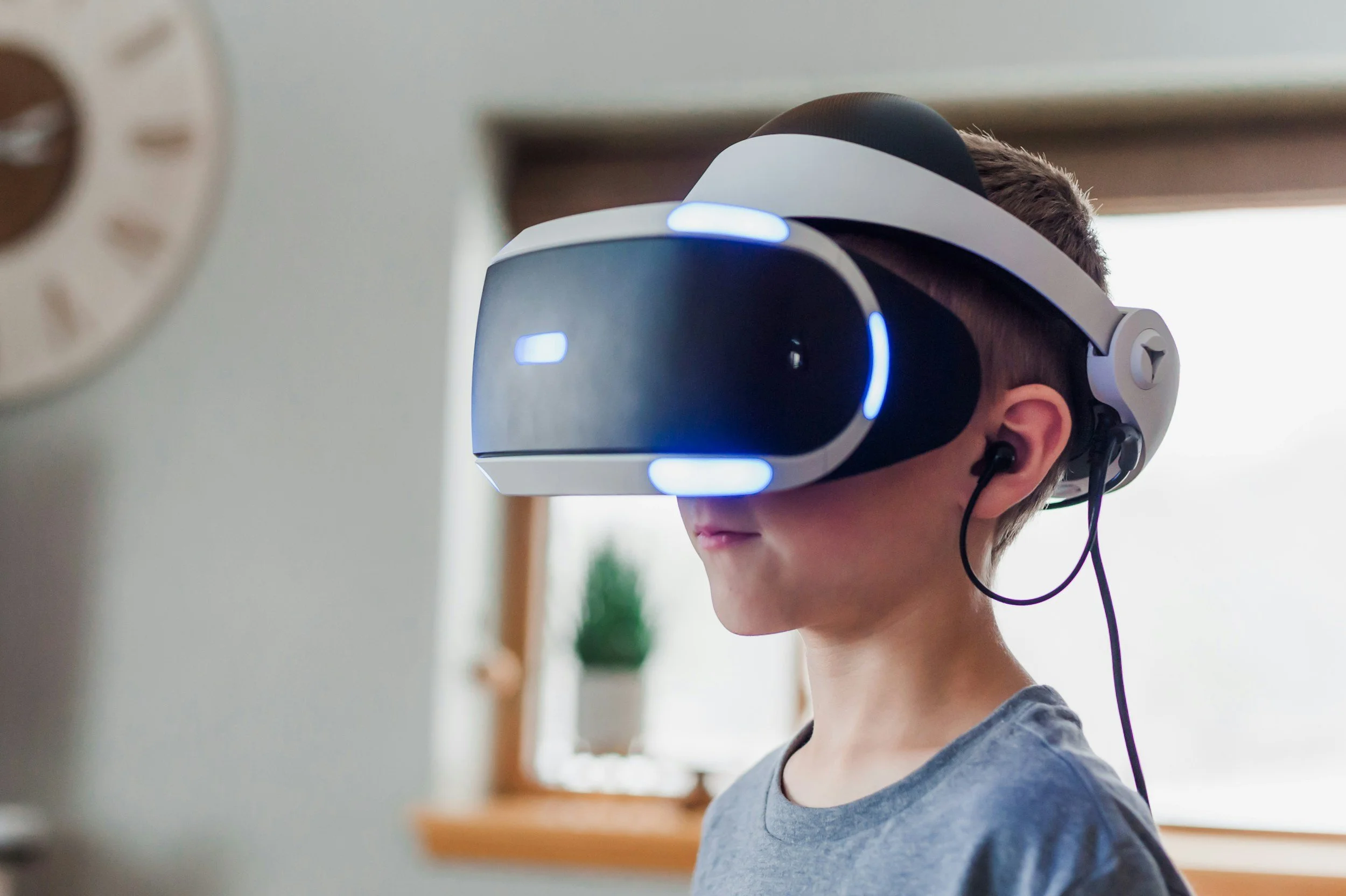
One of the biggest benefits of VR is that it creates meaningful contexts for communication. Many communication skills are difficult to practice using worksheets or picture cards alone. For example, ordering coffee, asking for help in a store, introducing yourself at a social event, or participating in a work meeting all require language, attention, memory, problem-solving, and social skills working together. In a VR environment, these situations can be recreated repeatedly, allowing individuals to practice communication strategies while receiving support from a Speech-Language Pathologist (SLP). This helps bridge the gap between therapy activities and everyday life.
VR can be particularly helpful for people with aphasia and brain injuries because it allows communication tasks to be practiced in realistic environments before attempting them in the community. For example, someone recovering from a stroke might practice ordering food in a virtual restaurant, asking questions at a virtual pharmacy, or navigating conversations at a family gathering. Individuals with cognitive-communication difficulties can work on managing distractions, remembering information, switching attention between tasks, and responding to unexpected situations. People who stutter may practice speaking with unfamiliar listeners in a low-pressure environment before using those skills in the real world. Children and teens with social communication differences may practice reading social cues, initiating conversations, and navigating group interactions.
Families can also incorporate VR experiences at home in practical ways. For example, a person preparing to return to work might explore virtual office environments and practice introducing themselves, asking questions, or participating in discussions. Someone with social anxiety might use VR programs that simulate conversations with unfamiliar people while focusing on communication strategies learned in therapy. A teenager working on social skills could practice recognizing facial expressions and conversational turn-taking in virtual social settings. The key is to choose activities that directly connect to real-life goals rather than treating VR as entertainment alone.
VR is not the right fit for everyone. Some individuals experience motion sickness, dizziness, headaches, visual discomfort, or fatigue while using VR systems. Others may find the technology overwhelming due to sensory sensitivities, cognitive difficulties, or difficulty understanding virtual environments. For individuals with significant visual impairments, severe confusion, or medical conditions triggered by immersive visual experiences, alternative therapy approaches may be more appropriate. An SLP can help determine whether VR is likely to support or hinder progress based on an individual's communication profile, goals, and tolerance for technology.
The most effective use of VR happens when it is paired with evidence-based speech therapy. An SLP can identify communication goals, select appropriate VR activities, teach strategies before entering the virtual environment, and help individuals reflect on what worked afterward. For example, an SLP might help a person with aphasia practice key phrases before entering a virtual restaurant, or help a brain injury survivor develop strategies for managing distractions during a simulated shopping task. VR is not a replacement for skilled therapy, but it can be a powerful tool for creating meaningful practice opportunities. When used thoughtfully, it can help individuals build confidence, strengthen communication skills, and prepare for the communication demands of everyday life.